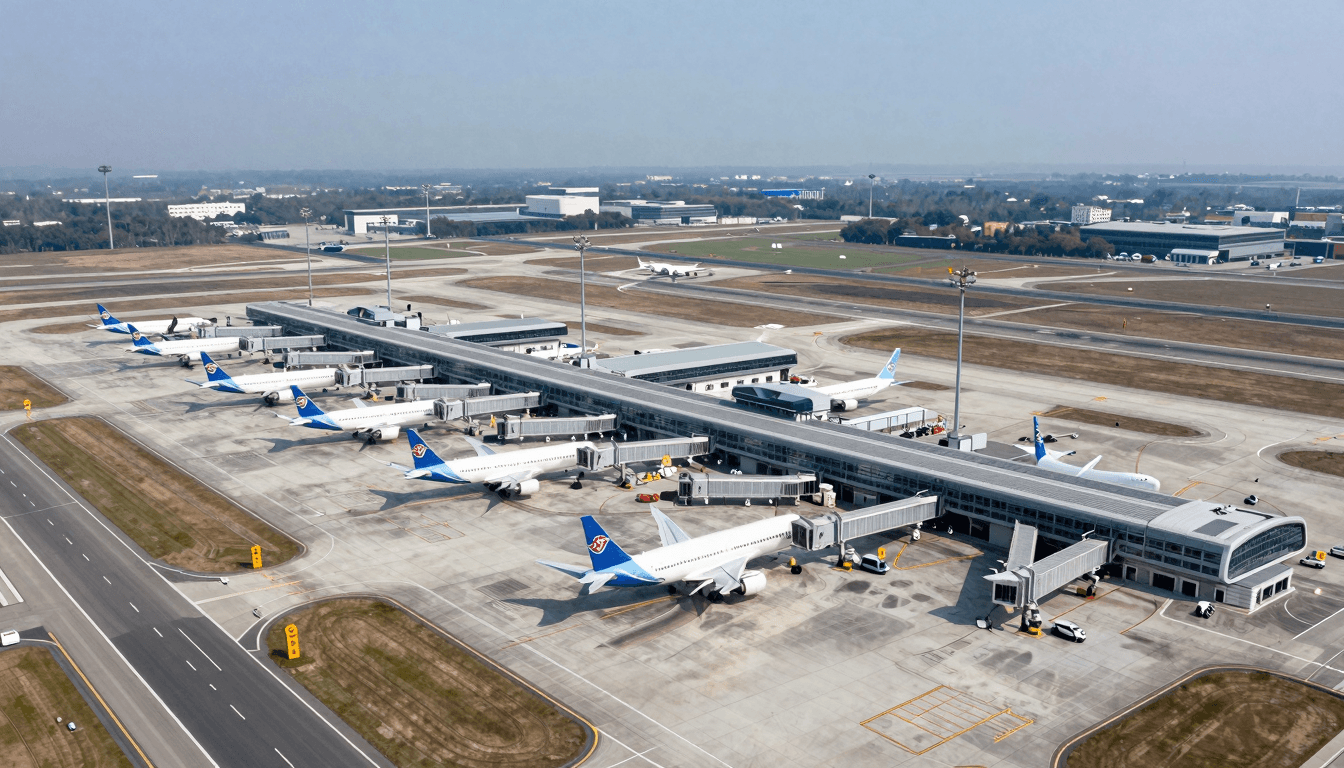
A quick reference sheet for the numbers and identity behind Rome's main airport, updated with recent traffic and growth data.
Identity
Full name: Rome–Fiumicino "Leonardo da Vinci" International Airport. IATA code FCO, ICAO code LIRF. Located on the coast at the mouth of the Tiber, about 30 km from central Rome.
Traffic
In 2024, Fiumicino handled about 49.2 million passengers and 315,597 aircraft movements — a 21.36% jump over 2023 — making it Italy's busiest airport by a wide margin. Growth continued into 2025, with the airport reaching a record roughly 51.3 million passengers, up about 4% year on year, adding around 30 new routes and 6 new airlines, and reaching a network of roughly 100 airlines serving about 80 countries.
European ranking
Fiumicino has climbed to around the 7th-busiest airport in Europe by passenger traffic, overtaking hubs including London Gatwick and Munich, and has been recognized as one of the fastest-growing major airports on the continent in recent years.
Terminals and hub carrier
Two terminals currently operate: Terminal 1 (domestic/Schengen) and Terminal 3 (extra-Schengen/intercontinental) — Terminal 2 closed permanently in 2017. ITA Airways, a SkyTeam member, uses FCO as its home hub.
Awards and recognition
Fiumicino has repeatedly won the ACI Europe Best Airport Award in the 40-million-plus-passengers category, reflecting consistent recognition within the industry for its passenger experience and operational performance even as traffic has grown quickly.
Ownership and operator
The airport is operated by Aeroporti di Roma (ADR), which also runs Ciampino, Rome's secondary airport — the two operate as a connected system under the same operator, sharing infrastructure like the e-gate network described elsewhere on this site.