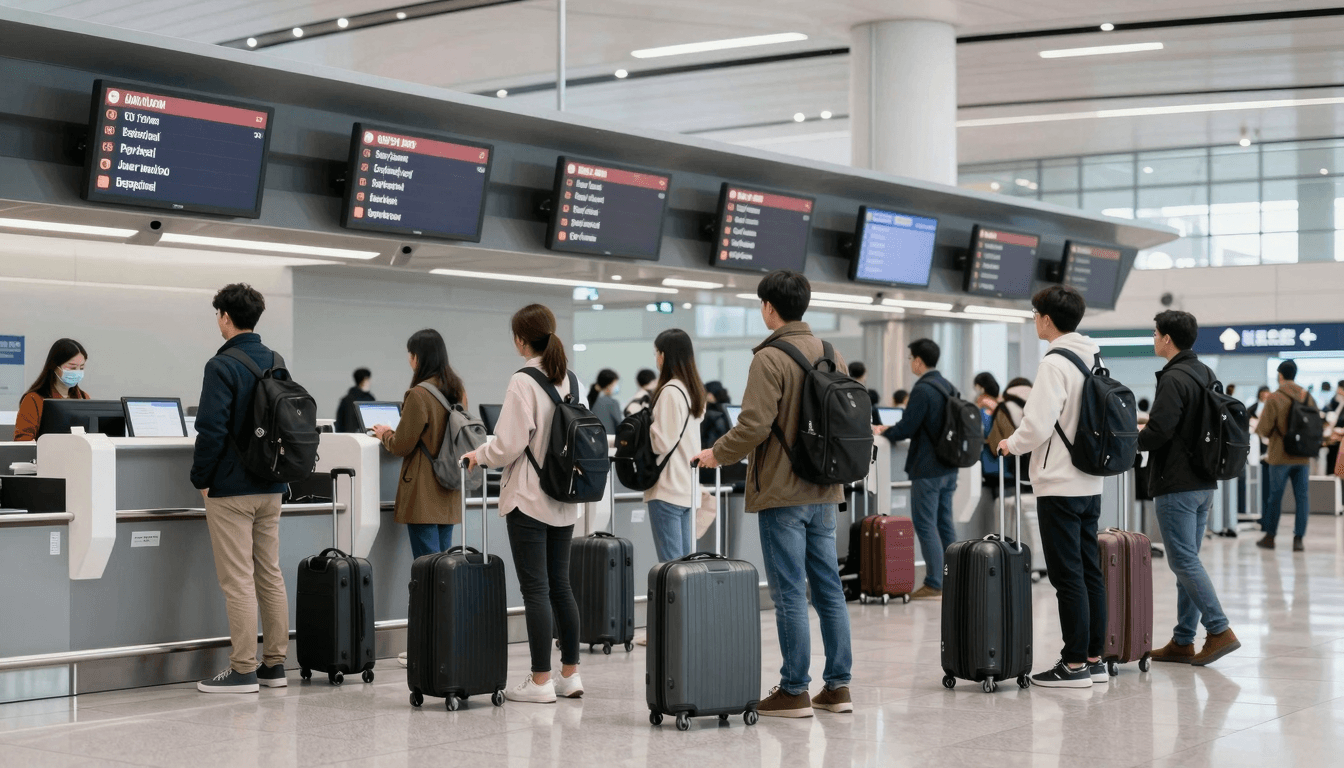
Aeroporti di Roma's own guidance doesn't give a fixed number of hours — it just says to allow enough time for check-in, security, and (if relevant) passport control. In practice, most travelers use standard industry rules of thumb rather than an FCO-specific figure, and a few Fiumicino-specific quirks make it worth padding your estimate.
General guidance
The commonly used rule of thumb is around 2 hours before a Schengen or domestic flight, and 3 hours before an extra-Schengen or intercontinental departure. Treat this as a starting point, not an FCO-published minimum — adjust for your airline's own bag-drop cutoff, which is usually stricter than the airport's own recommendation.
Know your terminal in advance
Terminal 1 (domestic and Schengen) and Terminal 3 (extra-Schengen and intercontinental) aren't linked airside — arriving at the wrong terminal means backtracking through landside. Confirm your terminal on your boarding pass or booking before you leave for the airport.
Buy Fast Track if security queues worry you
Aeroporti di Roma sells a paid Fast Track security lane for €10 per passenger (children 0–12 free with a paying adult), bookable online up to 24 hours ahead — a reasonable way to reduce the time-buffer you'd otherwise need to build in.
Peak travel times to plan around
Fiumicino has been setting passenger records in recent years, and mornings and early evenings on weekends and holiday periods see the heaviest volumes at both check-in and security. If your flight departs during one of those windows, lean toward the higher end of the 2–3 hour rule rather than the lower end.
If you have a tight international connection
If your journey involves an extra-Schengen arrival followed by a Schengen or domestic departure (or vice versa), you'll clear full passport control between the two legs, plus a possible terminal change between Terminal 1 and Terminal 3. Airlines generally set minimum connection times that already account for this, but if you're self-connecting on separate tickets, build in noticeably more buffer than the airline's own minimum, since a missed self-booked connection isn't the airline's responsibility to rebook.