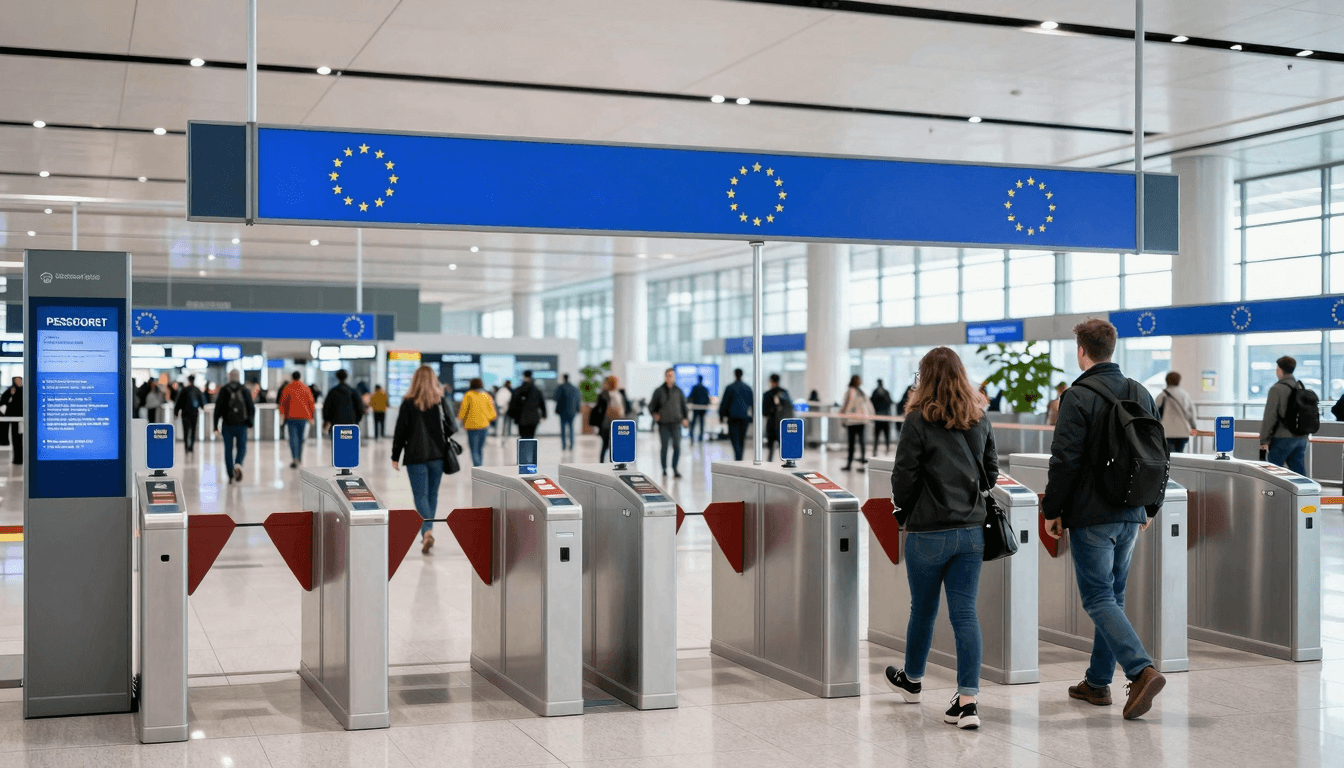
Italy is a full Schengen Area member, so the general EU entry rules apply at Fiumicino just as they do at any other Schengen border crossing — with a significant recent change to how that border check is actually processed.
The 90/180-day rule
Visa-exempt travelers (including most Western passport holders) can stay in the Schengen Area for up to 90 days within any 180-day period without a visa. Time spent in any Schengen country counts toward the same limit — it isn't reset by moving between Schengen countries.
Passport validity
Non-EU travelers generally need a passport valid for at least 3 months beyond their planned departure date from the Schengen Area, and issued within the previous 10 years. Airlines will typically check this before boarding, not just border control on arrival.
The Entry/Exit System (EES)
Since 12 October 2025, the EU's Entry/Exit System has been live at Fiumicino, registering biometric data (fingerprints and a photo) for most non-EU nationals on short stays. Aeroporti di Roma has deployed 210 self-service kiosks to handle registration, with progressive access extended to eligible biometric-passport holders aged 12 and over as the rollout continues. Expect this to add a step to first-time entries compared to the older stamp-only process.
ETIAS
The EU has also been preparing ETIAS, a pre-travel authorization requirement for visa-exempt travelers. Its official rollout timeline has shifted more than once, and as of mid-2026 the EU has not committed to a firm launch date, saying only that one will be announced several months in advance — check the current requirement for your nationality closer to your travel date rather than relying on an older projected date.
Non-Schengen travelers transiting FCO
If you're only transiting airside through Fiumicino between two non-Schengen flights and never crossing into the Schengen zone itself, standard Schengen entry rules and EES registration generally don't apply to you the same way — but the specifics depend on your nationality and whether your itinerary requires you to exit and re-enter security. Check your specific routing with your airline if you're unsure whether your connection counts as an entry.
What to have ready at the border
Whether you're going through an e-gate or a staffed booth, have your passport (and boarding pass, if requested) easily accessible, and be ready to state the purpose and expected length of your stay if asked by a staffed-booth officer. Automated EES kiosks will prompt you through the biometric capture step by step, so read the on-screen instructions rather than assuming the process matches an older manual stamp check.