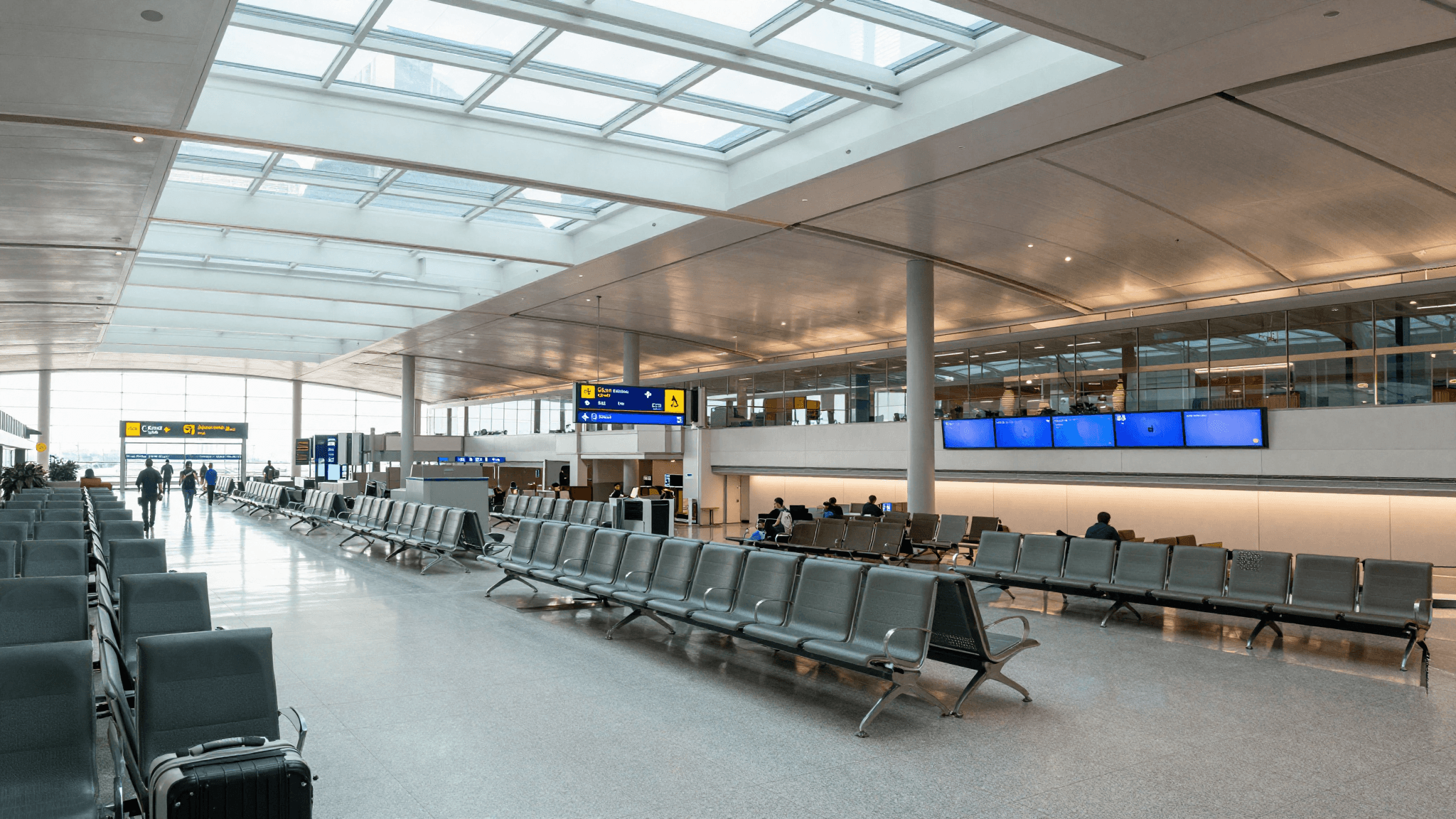
Fiumicino currently operates two passenger terminals, and they're organized by route type rather than by airline alliance — understanding which boarding area you're in matters more here than at most airports, since the two terminals don't connect airside.
Terminal 1 — Boarding Area A
Handles domestic and Schengen flights, and is the hub for ITA Airways, which has consolidated all its check-in and security here. Gates are grouped under Boarding Area A (A1–A10, A21–A29, A31–A52, A61–A83). A renovated pier — 25,000 m², with 12 airbridge gates and 44 self-boarding gates — opened here in 2023.
Terminal 3 — Boarding Area E
Handles extra-Schengen and intercontinental flights. It's the airport's largest terminal, incorporating what used to be a separate Terminal 5, with gates grouped under Boarding Area E (E1–E8, E11–E24, E31–E44, E51–E61).
The satellite pier and SkyBridge
Terminal 3's remote satellite pier (gates E31–E44, opened 2016) is reached via SkyBridge, an automated people mover — outbound only for departures, and there are no lounges at the satellite end, so plan your lounge visit before you board the SkyBridge.
Getting between check-in and gates
Both terminals use a straightforward one-way flow from landside check-in through security to the gates, with moving walkways along the longer piers in Terminal 3. Signage is in Italian and English throughout, with gate numbers and boarding-area letters posted well before the security checkpoint, so you can confirm you're heading the right way before you commit to a queue.
Facilities in each boarding area
Boarding Area A (Terminal 1) concentrates most of the airport's dining, including the Eataly location, alongside its own duty-free shops and lounges. Boarding Area E (Terminal 3) houses the larger Tax Free Mall and the majority of the airport's intercontinental-facing lounges, given it serves longer-haul departures where passengers are more likely to spend time airside before boarding.
What happened to Terminal 2?
Terminal 2 closed permanently on 15 December 2017 to make way for Terminal 1's expansion. There's no Terminal 2 in current use — if an older source or map mentions it, it's out of date.